

Magento · 4 min read
Pop-ups are back! But how effective are they for ecommerce?
In today's post we're looking at ecommerce pop ups and whether they're actually effective. Read our blog post to find out more.
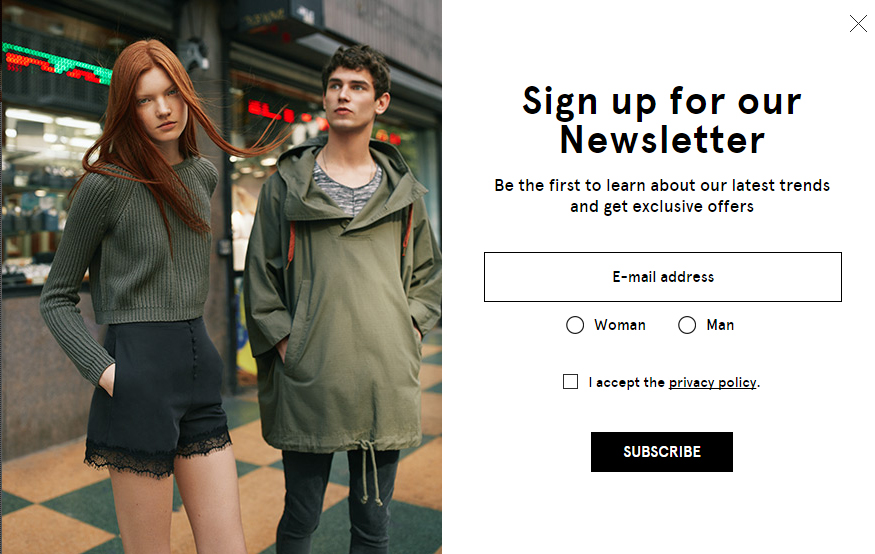
You’ve probably noticed, over the last year pop-ups have been appearing on ecommerce sites all over the web. Some have introductory offers, some offer a newsletter sign up and some offer personalised promotional codes. Pop-ups have made it on to many ‘2016 trend’ blogs and have already been implemented by many online stores. So, do they actually work?
The purpose of a pop-up.
Pop-ups are used for two main reasons:
-
To capture data
-
To encourage a conversion The average ecommerce site has a 3% conversion rate, that means out of every 1,000 visitors you receive 970 will exit the site without making a purchase and likely without logging in/registering. That’s 970 potential customers, a proportion of which you may have earned through paid media, lost without trace. This has been, and will continue to be, the largest problem facing ecommerce retailers today – how do you convert more customers?
Re-engagement.
To answer that question, we have to look at the most successful re-engagement strategy. As marketers, we know that email marketing can be highly successful as a channel. Abandoned cart emails, for example, have been shown to achieve an average of 47% open rate and a 5% conversion rate (Remarkety). That’s 5% more sales that had been lost, all by sending an automated mailer. With 58% of adults checking their email first thing in the morning (Customer Intelligence), this channel is clearly an excellent way to reaching out to your customer base and I firmly believe it will never be ‘dead’.
Data acquisition.
So, we have website traffic and a re-engagement strategy, but how do we acquire the email address? This is where the pop-up comes in. Like them or loathe them, recent studies have shown how successful the implementation of a pop-up can be. Data from one study revealed a 1375% increase in email sign-ups when comparing a pop-up with a sidebar form. Another study based on SkinnyMe Tea found the company increased email opt ins by 758% after implementing an on-site pop-up. By offering a discount code on site, SkinnyMe Tea was able to increase their sales conversion rate by a full 1%.
Quite simply, if you can encourage website visitors to hand over their email address (often for something in return such as a discount code), you open up a vast opportunity for re-engagement if they decide not to make a purchase at that time. If a pop-up enables you to do this, I say it’s definitely worth testing out!
Types of pop-up.Promotional.
A promotional pop-up is most often used after a visitor spends a certain amount of time on the site. These pop-ups offer a discount in exchange for an email address. Top tip: if you’re using this type of pop-up, ensure you have a system that is sophisticated enough to recognise visitors. You don’t want to be showing one of your VIP customers ‘10% off when you sign up’, for example.
Newsletter.
The incentive behind this type of pop-up is content. If you produce engaging content, you can incentivise your visitors to reveal their email address by offering the latest news, trends, events etc. This type of pop-up works extremely well with lifestyle-led brands.
Site exit.
A site exit pop-up tends to focus on on-site conversions at that time. You may wish to promote a time-based offer such as ‘Free Delivery Today Only!’ or ‘You still have items in your basket – Here’s 10% off!’. There is a temptation with site exit pop-ups to forgo the email field and simply present a promotional code for the visitor to use there and then – remember that the goal here is to collect data as well as encourage promotions so I’d urge you to always use gated promotional codes.
Finally, and arguably most importantly – don’t throw design out of the window.
A pop-up is, for lack of better words, an intrusion in a customer’s user journey. Whilst this can be seen as a positive thing (when discounts are offered), it is vital that customers feel they are still engaging with the same brand and website at all times. This is why pop-up design should be extremely brand-led. If the design is disjointed, the pop-up will simply look like spam and visitors may just abandon the whole site. I urge you to run A/B tests to find what works best for your customers.
Pop-ups will never be for everyone.
Whilst there are some fantastic stats around the success of pop-ups, it all comes down to your customer base which is why testing is so important. If you have decided to go ahead with an on-site pop-up do your research, understand your customers and run a test on a controlled segment. Here are a few things to consider:
-
Always, always, always give the visitor the option to close the pop-up (and make it clear where to click)
-
Have a different strategy for mobile. Pop-ups can work on mobile, however, I’d recommend reviewing the design and animation to offer a more streamlined approach
-
No clunky pop-ups, please. Ensure your solution doesn’t impact the rest of your site’s load speed
-
Analytics will lead the way. Testing is all about data, collect this data by using click tracking – run your test and compare results at the end. How many visitors completed the goal? How many dismissed the pop-up?